
2026 Awards
Another year to get excited about professional awards.
Funnily enough, despite accruing 5 silvers and 5 bronze awards, it wasn’t these that gave me the most satisfaction this year.
It was actually judging, and awarding images that enabled others to gain recognition.
The professional awards system is not perfect, but it is as close as you can when trying to objectify something as subjective as art.
Five judging panelists are given an image to review, under uniform lighting and conditions. Images are most commonly printed to minimum standards, and presented in uniform matts. They are without title, and remain anonymous. (In later years, there has been the inclusion of some digital entries, in addition to prints). After independently entering a score between 50-100, there is initial score announced, often with an indication of the spread of scoring. If even and unanimous, that score is then attributed as final.
If there is a range of scoring, there is discussion that follows, observing set rules and protocols, overseen by the panel chair. After which, is a second and final rescoring. At which point, the clever IT judging algorithm determines the final numerical score, in order to enable the best use outcome, designed too in part to overcome any attempt to un-ncessarily overcompensate the discussion (up or down).
Sometimes, despite five sets of eyes on an image, the story may not always be clear. Sometimes that is because the image is too busy. Sometimes too unclear. Other times, simply not open to quick interpretation. Sometimes, someone has a personal anecdote to help explain the story or concept. There could be a judge who has a stronger art history awareness to understand the homage at play. Equally, others may bring a wealth of experience, to be able to explaining how that concept has been tried elsewhere or now appears ‘repetitive’. Sometimes (especially in technical areas such as nature or astro), someone know the background of subject or technique to fully realise the significance of what they are presented with. To that end, the make up of the judging penal is quite crucial to how an image may be scored. The awards system is run by an independent panel of NZIPP titled ‘Honours’. They do their utmost to establish the judging rules each year, to vette entries, train judges, run the judging system, etc. On each of the three judging days, across three judging rooms, ensuring judges are ‘fresh’, with a mix of Kiwi and international, male and female, new and experienced, general and specialist….
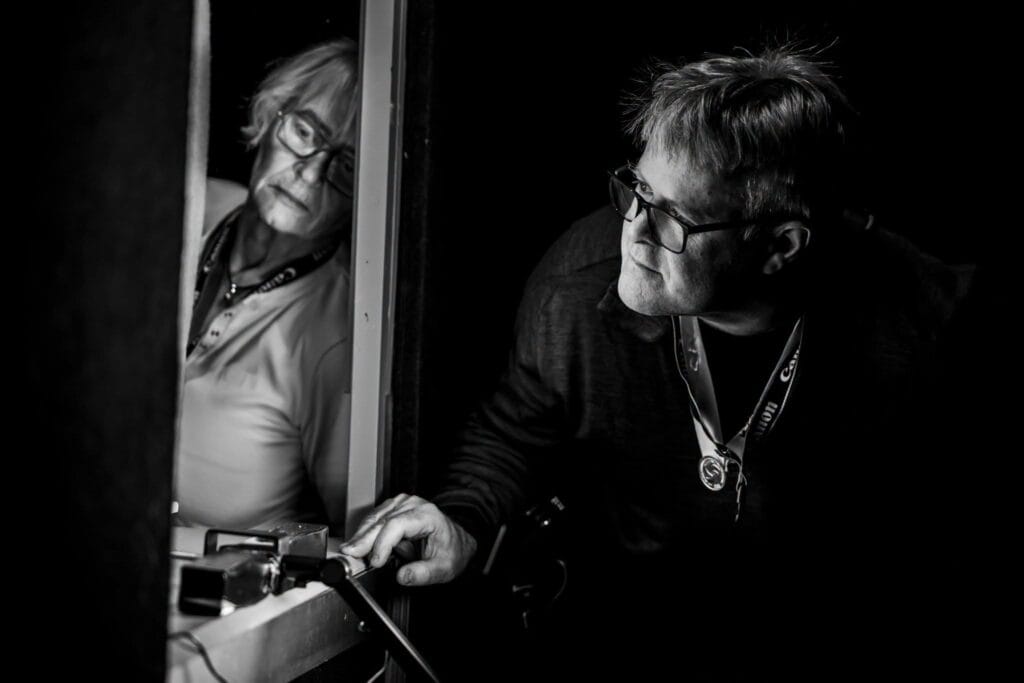
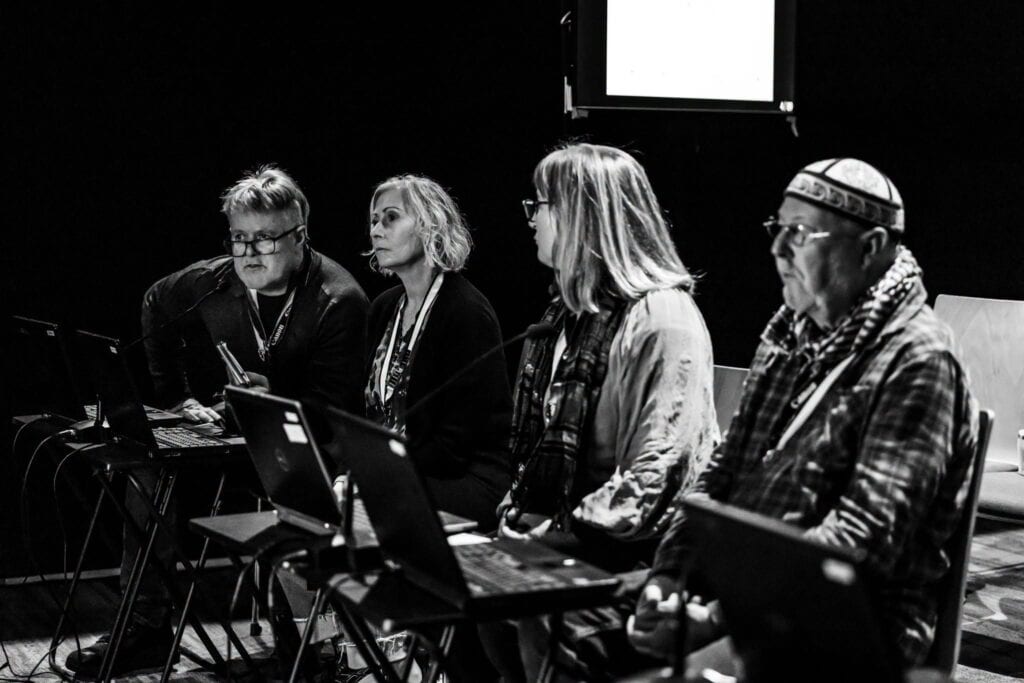
Photo credit : Doug Richardson
Sometimes, it can take just one person to ‘get’ the image. It could from experience, or it could be something guttural. It probably doesn’t matter, but if championed by one judge, the image has a chance for discussion and review. For many images, this could mean the difference between silver and silver distinction, or perhaps as I have seen between bronze or gold.
It is this pride, in seeing people achieve that has given the most satisfaction. Knowing how special & elusive a gold award title is, it is goes without saying how much this can mean to an entrant. It is often gives people the key for obtaining various professional distinctions, as well as consideration as category finalists etc. that is without any of the PR success or business exposure that can result.
Perhaps, the second most satisfying aspect of this year, was being awarded the NZIPP Volunteer of the Year. Without too much explanation here of all the in’s and out’s, it was nice to be recognised for the effort that has gone into being a NZIPP volunteer. This was from work across many of the areas – Iris judging, Asia Pacific awards, accreditation panels, regional committee, conference MC, helping run local events and workshops. I was most pleasantly surprised, and quite chuffed.
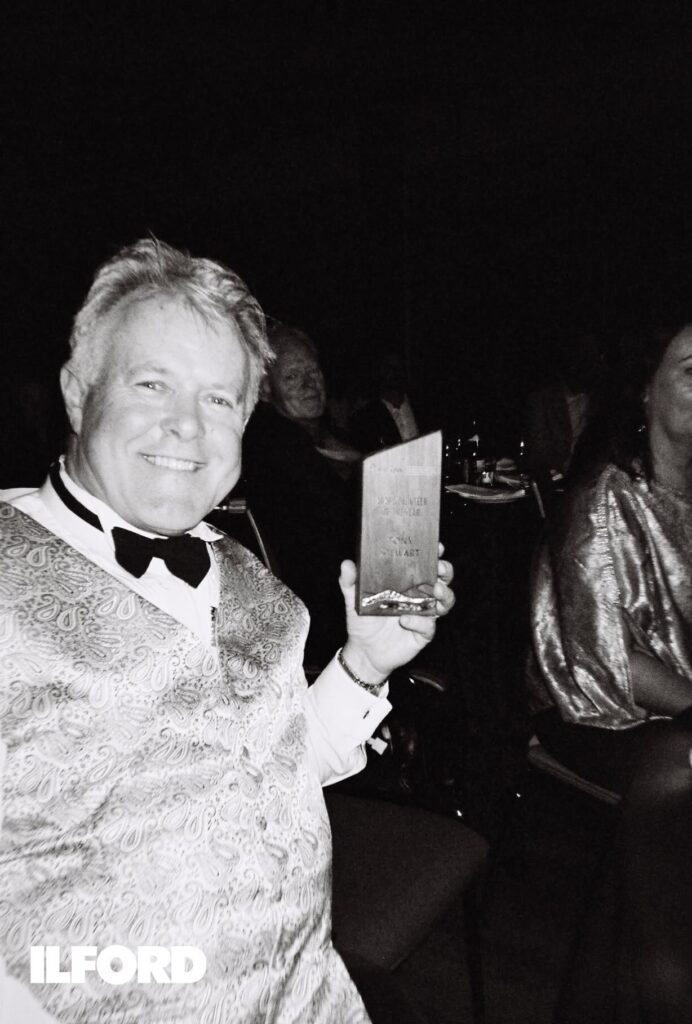
Ilford B&W disposable selfie!